Blakemore Mounds is a recently documented prehistoric earthwork complex on the right bank of the Middle Fork Forked Deer River near Humboldt, Gibson County, Tennessee. It is located at the physiographic interface of the loess sheet of the Western Plains and the upland Coastal Plains sands and clays. The archaeological site, whose Smithsonian trinomial is 40GB206, was identified based on recognition of a small cemetery on the surface of a low rectangular platform mound. The summit graves date from ca. 1850 to 1935 and are associated with the Blakemore and Crafton families, who settled in this part of West Tennessee shortly after the Chickasaw Purchase around 1825.
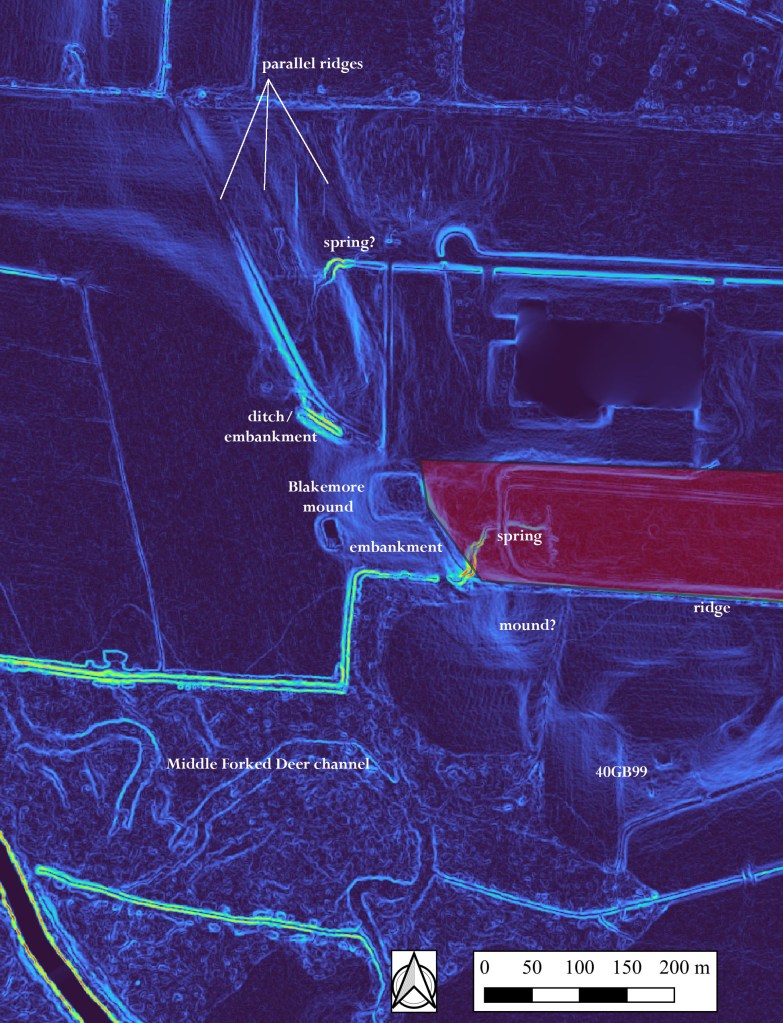
base:NRCS 2011 tif x32y397).
Spoil dirt from a shallow animal burrow located on the southwestern summit of the platform mound yielded numerous diagnostic prehistoric ceramics, including Late Archaic baked clay object fragments and Early Woodland pottery vessel sherds typed as Mulberry Creek Cordmarked, var. Tishomingo and Withers Fabric Marked, var. Craig’s Landing. The documented earthworks thus far consist of a low rectangular platform mound, a connected linear embankment breached by a spring-fed tributary, a deep ditch/embankment complex, barrow areas, and flanking parallel ridges. The larger landscape, encompassing approximately 144 ha, is a roughly rectangular elevated terrace of more resistant ferruginous sandstone capped with loess surrounded on three sides by tributaries. An eroded ring of Grenada silt loam defines the landscape perimeter. Although no radiocarbon dates are available, the site is thought to have been constructed and used ca. 300 BC–AD 100.
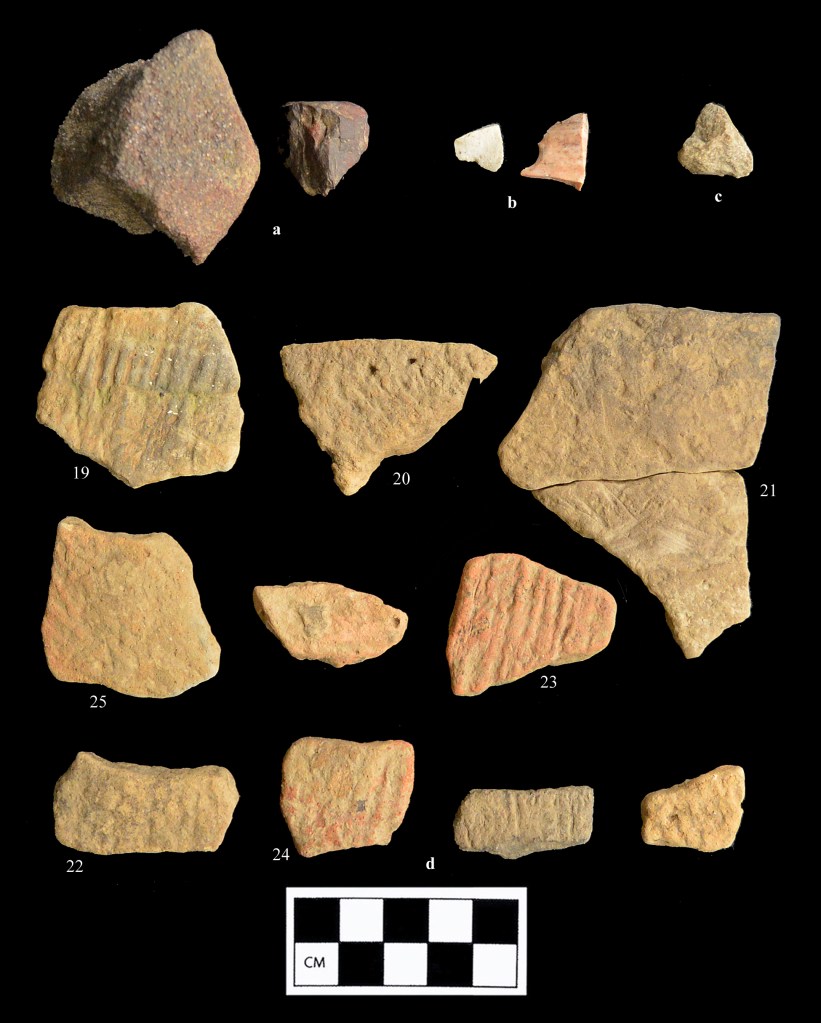
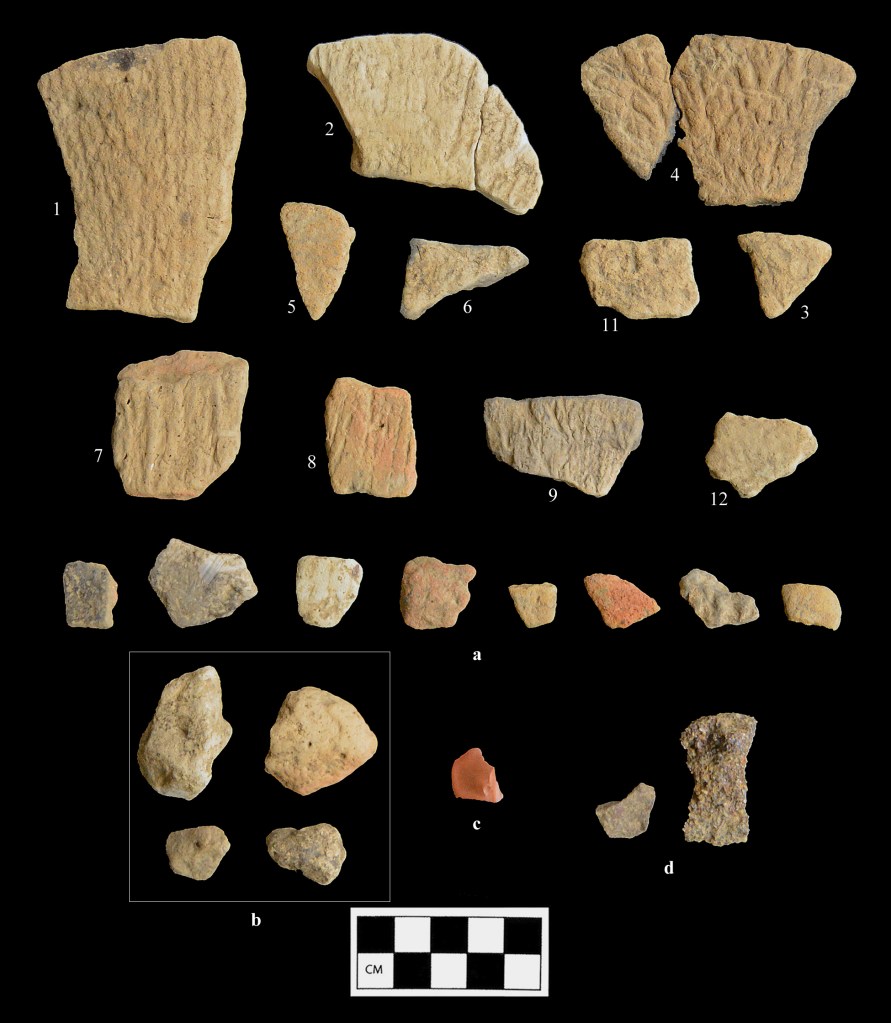
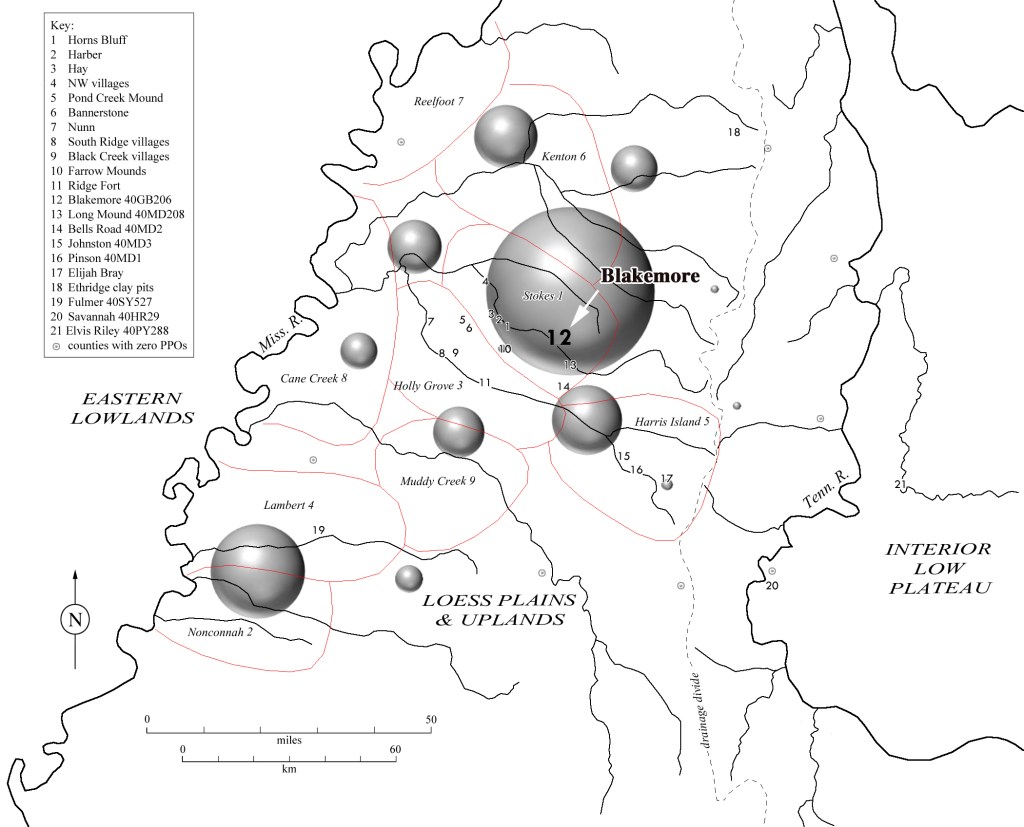
The Blakemore landscape is near the center of the largest concentration of Poverty Point era (ca. 1600-1000 BC) diagnostics in this portion of the central Mississippi River Valley and may have functioned as the predominant ceremonial site for local populations during the Terminal Archaic-Early Woodland interval. Several roughly coeval sites were documented in adjacent Crockett County during the antiquarian era. Details of the landscape features at the site, including connected ridges and platform mounds oriented at roughly 330⁰ and associated springs proximal to breaks in the embankment lines, have direct parallels to those found at Johnston Mounds (40MD3) in the upper South Fork Forked Deer drainage of Madison County, Tennessee.
For more technical details and related references see the post on my page at academia.edu: Blakemore Mounds (40GB206) and the Terminal Archaic–Middle Woodland Archaeological Record in West Tennessee
Mitchell R. Childress, September 2, 2022
 Field Columbia